


Managers are being squeezed from both sides.
On one hand: deliver results, protect margins, keep costs down.
On the other: be present, build culture, support people, develop talent, and do it all with fairness, flexibility and empathy. At the same time, AI is changing how work gets done, how decisions are made, and what “good leadership” even looks like.
So what’s really driving the pressure? What happens when managers have less time for leadership? What can HR do to relieve the load, without absorbing it all?
Two agendas—one manager
Employee expectations have shifted. People want clarity, autonomy, and fair treatment. They want real conversations about development, performance and opportunities—not just status updates and admin. Meanwhile, many leadership teams are facing a tougher economic reality. Productivity and cost control are back at the top of the agenda, and targets aren’t getting any softer.
That collision lands squarely on the manager’s desk.
AI raises the stakes
Layer on an AI-driven transformation that is already reshaping workflows and decision-making. In many organisations, the rules of the game are changing faster than roles, structures and capabilities can keep up.
McKinsey estimates that 60–70% of current work activities have the potential to be automated by generative AI. That doesn’t just affect operations—it impacts leadership, capability-building, recruitment, role design and engagement.
In other words: managers aren’t only asked to lead people through change. They’re asked to lead while the foundations are moving. The result is a leadership role defined by conflicting demands—and limited room to manoeuvre.
Less time for leadership means lower trust and more conflict
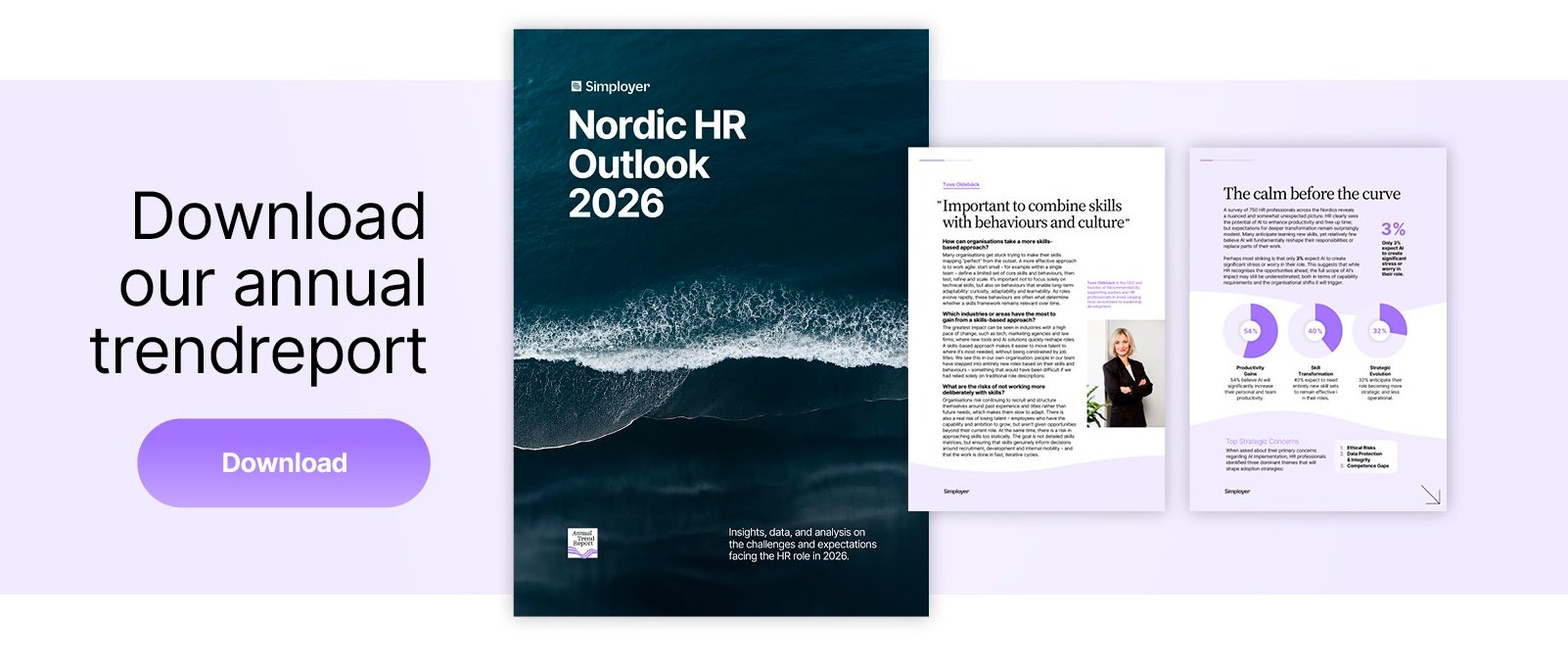
You can see the pressure in the HR survey Simployer conducted at the end of 2025, as part of the annual trendreport Nordic HR Outlook 2026.
- Only 19% say managers in their organisation have time for high-quality conversations with employees.
- 48% say managers’ biggest challenge in 2026 will be hitting targets while handling increasing demands from the business.
- More than half believe managers are not sufficiently equipped for today’s requirements.
It’s tempting to read that as a leadership problem. But the data suggests something else. Our employee survey data (&frankly) shows that trust in managers remains high:
- 84% say their manager is honest and ethical.
- 79% say their manager is transparent.
So this isn’t primarily about willingness—or even capability. It’s about capacity.
When managers run out of capacity, HR pays the price
Managers want to lead. Many can lead. But when time and resources don’t add up, something has to give.
“When time runs out, human presence is often the first thing to disappear,” says Fam Camilla Viksand Manson, HR expert at Simployer.
And the knock-on effect is predictable: HR absorbs more of the operational load. More casework. More urgent questions. More firefighting. Less time for strategic HR work. Less momentum in long-term initiatives. And often, slower progress on AI implementation—despite HR playing a key role in making it responsible, sustainable and people-centred.
Again, our HR survey supports this picture:
- 65% say their workload increased in 2025.
- 40% say a significant share of their tasks sits outside HR’s core responsibilities.
So the question isn’t whether leaders need support. The question is: how do we rebuild space for leadership—before trust erodes, conflicts rise, and strategic work stalls?
How HR can support managers under pressure
1. Define what “good leadership” means—clearly
Ambiguity creates stress. Clear expectations reduce cognitive load and help managers prioritise. What matters most in your organisation right now—and what can wait?
2. Build simple leadership rhythms that repeat
Leadership gets easier when it’s structured. Regular check-ins, predictable feedback loops and recurring 1:1 routines create stability for managers and employees alike.
3. Protect time for human leadership
If managers spend their days on admin and low-value tasks, they will lead less—no matter how good they are. Remove friction. Streamline processes. Reduce the noise so leaders can focus on relationships, coaching and communication.
4. Prepare managers for an AI-augmented workplace
Managers need support in how AI affects decisions, communication and accountability. They also need practical guidance: What is acceptable use? What requires transparency? What does “AI literacy” mean in practice for leaders?
5. Keep strengthening psychological safety and culture
In uncertain times, culture isn’t a “nice to have.” It’s risk management. Leaders who listen, communicate clearly and build inclusive environments are essential—especially when pressure is high.


 Get HR news straight to your inbox